
Designing and Flexible Solar Mounting that Works for Installer
At Enstall, we’ve always believed that the best solar solutions begin with one question: what does the installer need?
That philosophy has guided our approach for more than two decades. It’s why we prioritize quality, design for ease of use, and build systems that solve real-world challenges—not theoretical ones. And it’s why modularity has become a cornerstone of our product development.
Modularity isn’t just an engineering choice—it’s a strategy grounded in respect for the people who bring solar to life. It gives installers the flexibility to adapt, the confidence to scale, and the tools to work smarter across a wide range of roofs, regulations, and realities.
Because when you put the installer first, you build systems that work better—for everyone.
Modular Design for a Complex Industry
The solar industry is anything but one-size-fits-all. Roof structures vary from market to market, permitting standards shift by region, and installer preferences differ based on training, team size, and customer needs. Enstall’s modular approach reflects that complexity—not by adding more layers, but by enabling more flexibility.
By standardizing key components and allowing them to work across roof types and configurations, our systems let installers carry less inventory, train teams faster, and respond to unexpected site conditions without added delays or costs.
Efficiency That Scales with You
In any economic environment, time is money. But now more than ever, installers need to complete more jobs without sacrificing quality. Modular systems help make that possible. Swappable parts. Tool-less attachments. Interchangeable rails. These features aren’t just about design—they’re about moving confidently from one job to the next.
And as your solar business grows, modularity grows with you. Systems that work on residential pitched roofs today can scale into commercial rooftops or integrate into digital planning tools tomorrow. That’s long-term value, built in from the start.
Quality That Carries Across Systems
Across Enstall’s brands—EcoFasten, IronRidge, Schletter, PanelClaw, Sunfer, BluBase, and Esdec—modularity is not a bolt-on feature. It’s part of our DNA.
Modularity isn’t just about swapping parts—it’s about creating systems that work together intuitively. It’s about empowering installers to deliver consistent, quality work across diverse environments. And at Enstall, it’s how we bring our commitment to innovation, quality, and the installer experience to life.
In North America, IronRidge’s XR Rail® system is a modular backbone for residential and commercial solar. With interchangeable rails (XR10, XR100, XR1000) and the BOSS® Bonded Structural Splice, it enables long continuous spans, fewer roof penetrations, and flexible layouts. These systems are designed to adapt—whether you’re installing on a small home or a sprawling commercial facility.
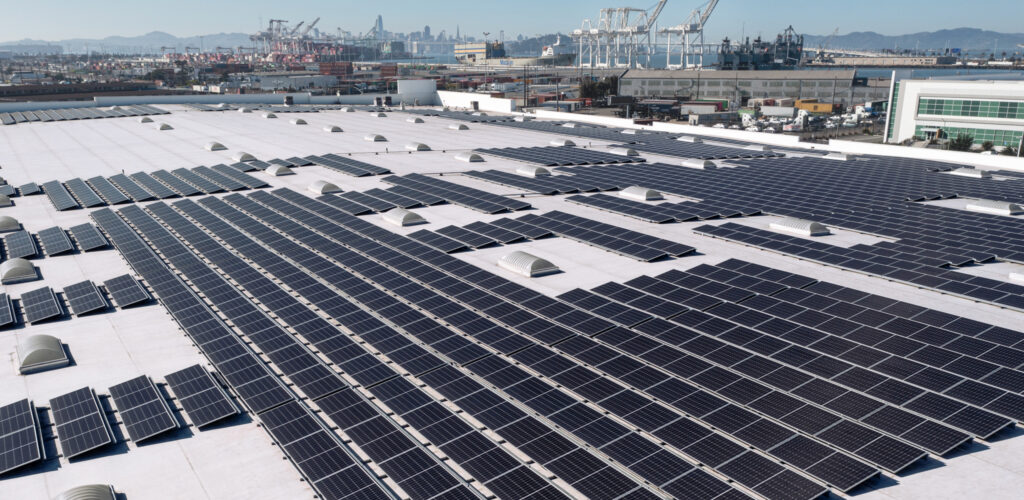
PanelClaw’s clawFR and clawFRplus systems bring modularity to flat roofs. Their universal components and tool-less Cam Claw attachments let installers adapt to site conditions quickly, without sacrificing speed or safety. As part of Enstall, PanelClaw’s solutions benefit from shared innovations and cross-brand compatibility—giving installers consistent experiences across rooftops and geographies.
In Europe, ClickFit EVO offers one of the most flexible pitched roof systems available. With a compact set of just four base components that work for tiled roofs, metal roofs, corrugated roofs and membrane roofs, it dramatically reduces training time, inventory needs, and on-site decision-making. Installers can simply change or pick the needed attachment for each roof and they’re good to go—they can rely on a system designed to adapt.
EcoFasten is known for its roof mounts and attachments for both rail-less and rail-based systems. Their brackets and hardware are engineered to work across multiple product families, making them ideal for modular installation strategies on challenging roof types.
Schletter, Sunfer, Blubase, and Esdec each contribute additional modular capabilities to the Enstall portfolio, from high-load snow applications in alpine regions to minimalist systems for fast-moving residential installations. What ties all these systems together is a shared design language: flexibility, simplicity, and compatibility without compromise.
Looking Ahead: Building Smarter, Together
Solar installers today face evolving regulations, shifting incentives, and heightened customer expectations. But those are only the external pressures. Internally, growing teams, onboarding new staff, and staying ahead of product changes can all stretch even the most seasoned operation.
Enstall’s commitment to modular design isn’t just about product—it’s about partnership. We listen to installers, learn from the field, and adapt our systems accordingly. Because we know that when your tools support your goals, your business can thrive—even in times of change.
That’s what modularity means to us. It’s a design principle. It’s an operational advantage. And it’s a promise—to always build for the people who are delivering solar, sooner.
Frequently Asked Questions
Q: What does “modular” mean in the context of solar mounting systems?
A: In solar, modularity refers to systems designed with interchangeable components that work across different roof types, project sizes, or installation scenarios. Modular systems simplify inventory, reduce training time, and give installers the flexibility to adapt to real-world conditions without sacrificing performance or speed.
Q: Why is modularity important for solar installers?
A: Modularity helps installers do more with less—less inventory, less equipment, and less time spent troubleshooting on-site. It allows for smoother installations, fewer errors, and the ability to scale operations efficiently, even in changing or uncertain markets.
Q: How do Enstall brands support modularity across product lines?
A: Enstall brands like IronRidge, ClickFit, PanelClaw, EcoFasten, and others are all built with modularity in mind. For example, ClickFit EVO uses a compact set of components that adapt across tile, shingle, and corrugated roofs. IronRidge’s XR Rail system can be scaled for different load requirements with compatible parts. Across the Enstall portfolio, systems are designed to reduce complexity and maximize compatibility.
Q: Does modularity impact product quality or durability?
A: Not at all. Enstall’s modular systems are engineered to meet the same high-performance standards as any traditional system. In fact, modularity can enhance durability—fewer unique components means more consistent testing, better supply chain oversight, and systems that are easier to maintain or expand over time.
Q: How does Enstall support installers using modular systems?
A: Enstall backs its hardware with a full platform of digital tools (like the OnSite App and Enstall Calculator), in-person and virtual training through Enstall Academy, and regionally tailored support. Our tools are designed to make modular systems even easier to specify, quote, install, and maintain.